
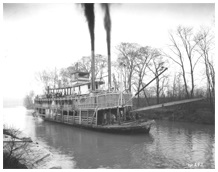
Hines Furlong Line’s long river history began in the 1870s when Captain Richard T. Williams came to the Green River with his family on his sawmill boat. He chose to settle in the river town of Evansville, IN, with his wife, Patience, and their four sons and three daughters. In Evansville, Captain Richard Williams, along with three of his sons—Captains Tom and Edgar Williams and engineer Will Williams—built a steamboat that launched the Bowling Green and Evansville Packet Company.
The brothers operated the company, transporting goods and passengers from Paducah, KY to Louisville, KY on the Ohio River; and from Evansville to Bowling Green, KY on the Green and Barren Rivers, with stops at the popular tourist destination, Mammoth Cave.
The company operated until the steamer Evansville burned in 1930. Descendants of the Williams family who were also employed by the packet company included Jett W. Hines—husband of Ida Mae Williams-Hines—who worked as a purser, and great-nephew James R. Hines, warehouse agent.
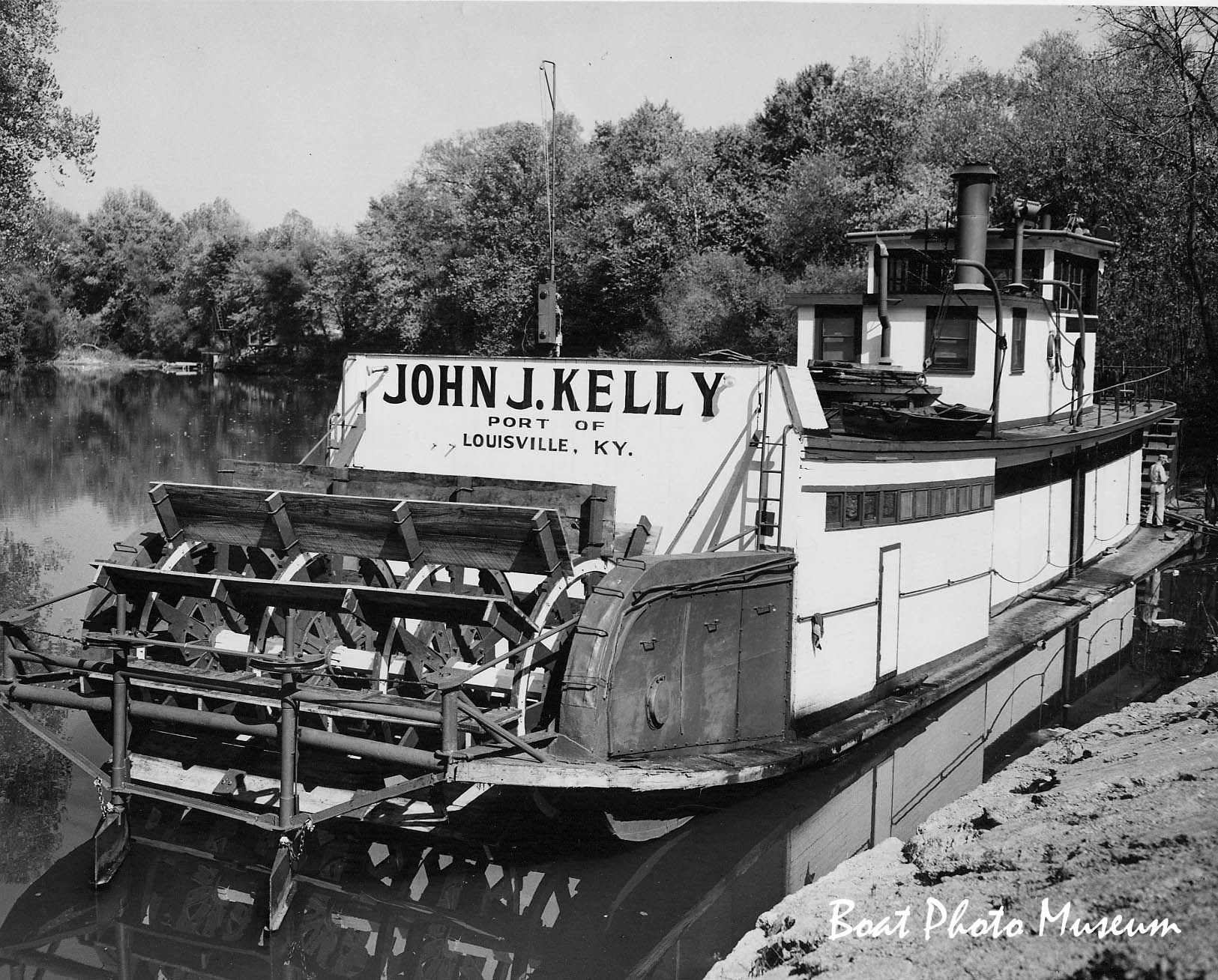
In 1940, James R. Hines and T. C. Melton formed James R. Hines and Company when they purchased the Queen of Dycusburg (60 hp) and the New Hanover (100 hp) to continue the asphalt towing trade started by Hines’ great-uncles. They towed rock asphalt from Kyrock, KY, on the Nolin River to Bowling Green on the Barren River. James G. Hines, son of James R. Hines and great-grandson of founding captain Richard T. Williams, continued the family river tradition by working on the New Hanover each summer beginning at age 14, continuing until his enlistment in the Army following high school graduation in 1943.
The company later expanded with the purchase of the M/V Shirley, powered by a 240 hp Fairbanks-Morse diesel engine, which was eventually replaced by the M/V John J. Kelley, 320 hp.
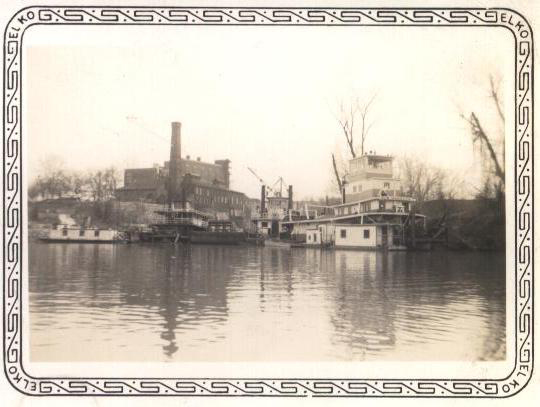
Following the closure of the Kentucky Rock Asphalt operation, James R. Hines and Company entered the gasoline trade, transporting gasoline for Shell Oil Company from Wood River, IL, and Mount Vernon, IN, up the Ohio River. In 1944, the company added Gulf Oil Company as a customer, towing gasoline from North Bend, OH, through the Kentucky towns of Carrollton, Frankfort, and Camp Nelson on the Kentucky River, and through Louisville and Evansville on the Ohio River. The trade extended to South Carrollton on the Green River and ultimately to Bowling Green.
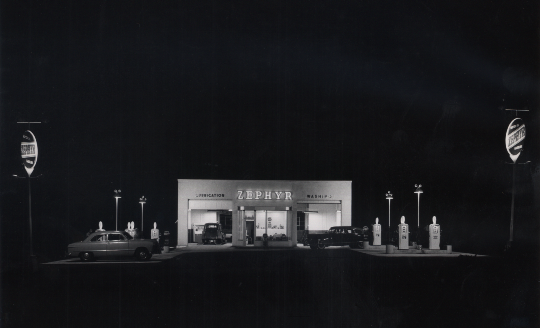
James R. Hines Corporation came into existence on May 8, 1946, when James G. Hines returned from World War II and merged his Army and river work savings of $15,000 with the assets of his father, James R. Hines: the M/V New Hanover and a 26’ x 120’ wooden asphalt barge. The wooden barge was immediately traded for a 4,200 bbl steel tank barge, the Hines 1. A few years later, the company expanded with the purchase of the M/V Hines Zephyr, followed by the M/V Knox. These vessels helped grow the fleet of purchased and chartered tank barges.
The James R. Hines Corporation owned the M/V Knox and M/V Hines Zephyr, and ultimately constructed, launched, and christened the M/V Harper C. Patton in 1953. The company towed gasoline into Bowling Green from Mount Vernon and also owned and operated Zephyr gasoline stations, a river terminal, and a tanker trucking facility near its offices in Bowling Green—where it distributed and sold gasoline to other companies.
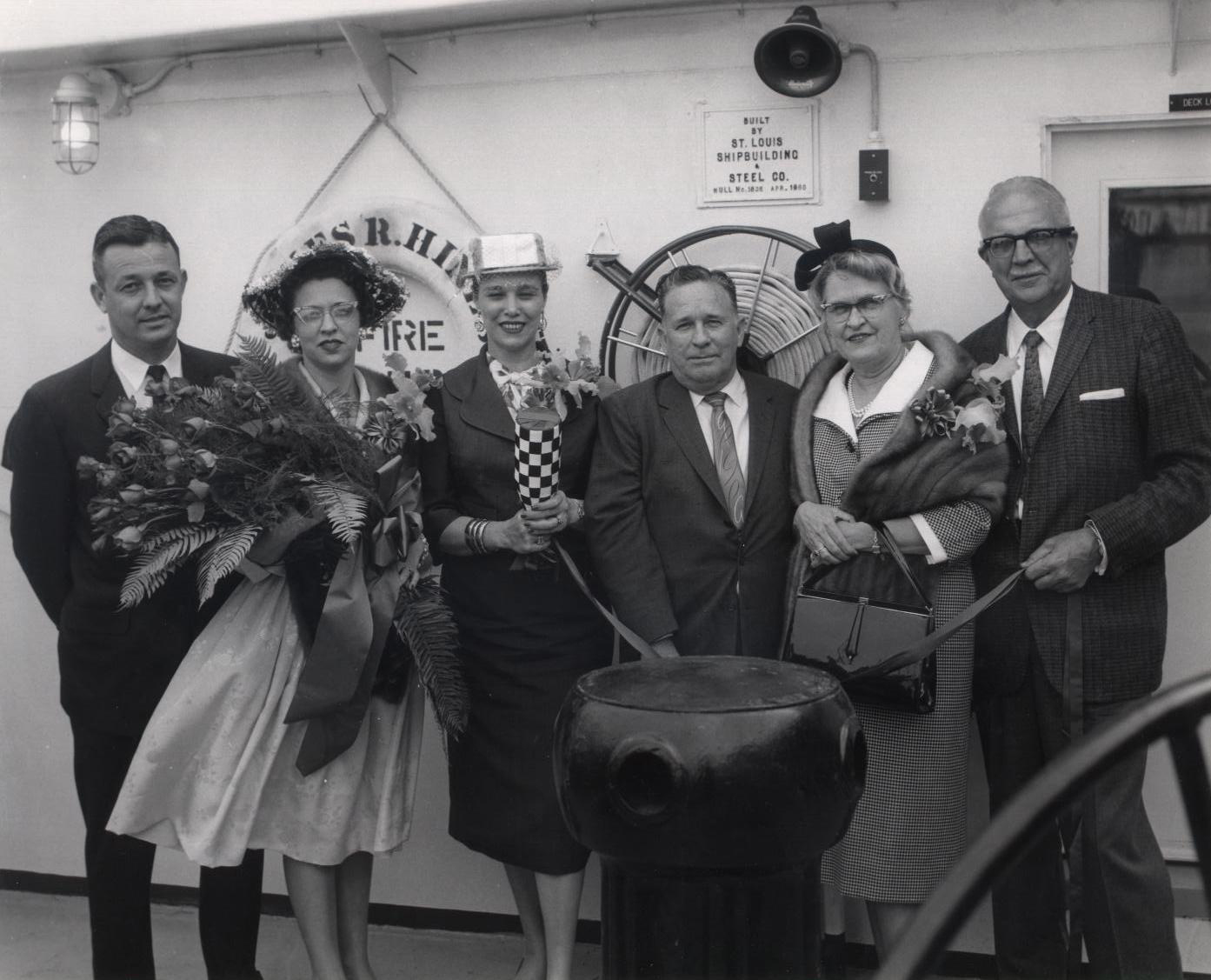
In 1955, Hines, Inc. was formed by James G. Hines and his brother, Warren W. Hines. It began with $5,000 in capital and a $50,000 debenture bond. Hines, Inc. started its fleet by purchasing the M/V Producers, a 410 hp single-screw towboat, and two new barges built by Paducah Marine Ways, which was owned by St. Louis Ship. A few years later, the fleet grew with the addition of the M/V Sally Ann.
Hines, Inc. built its first new towboat—the M/V James R. Hines—at St. Louis Shipyard. The M/V James R. Hines was 1,800 hp and was later repowered to 2,800 hp.
In 1963, the company underwent additional expansion with the purchase of the M/V Larry Turner (2,800 hp) and six barges from Hutchison Barge Line. Three years later, the recently repowered 3,200 hp M/V William Barnes was purchased. Along with the fleet growth, the company expanded its operating area to cover the entire inland waterways—from Houston, TX, to as far north as Pittsburgh, PA, and Minneapolis, MN.
Four years later, the company increased its horsepower with the addition of the 1,600 hp M/V William Clark. The next year (1971), the company purchased the 2,800 hp M/V Duncan L. Hines. In 1974, Hines, Inc. turned to the shipyards again for the construction of its flagship vessel at Jeffboat—the M/V James G. Hines (5,600 hp).
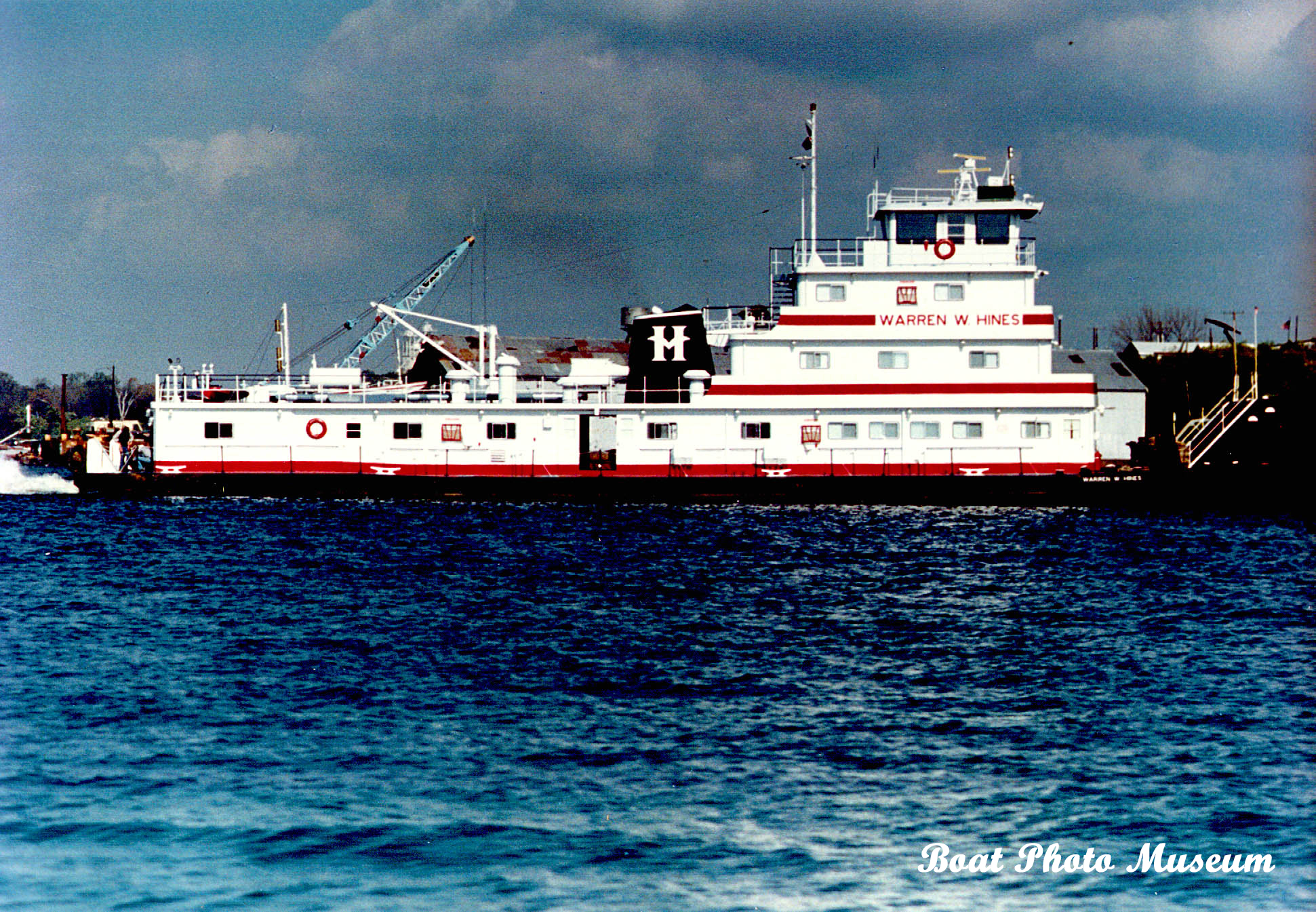
Eight years later, in 1982, the company—now with approximately 110 employees—took delivery of the M/V Warren W. Hines from Jeffboat. Throughout the remainder of the 1980s, the company did not expand its towboat fleet, but new barge construction allowed the fleet to grow to 33 double-skin, company-owned barges and 28 double-skin, customer-furnished barges.
In 1991, the assets of Hines, Inc. were sold to the Jeffersonville-based American Commercial Barge Line, and Hines American Line was formed.
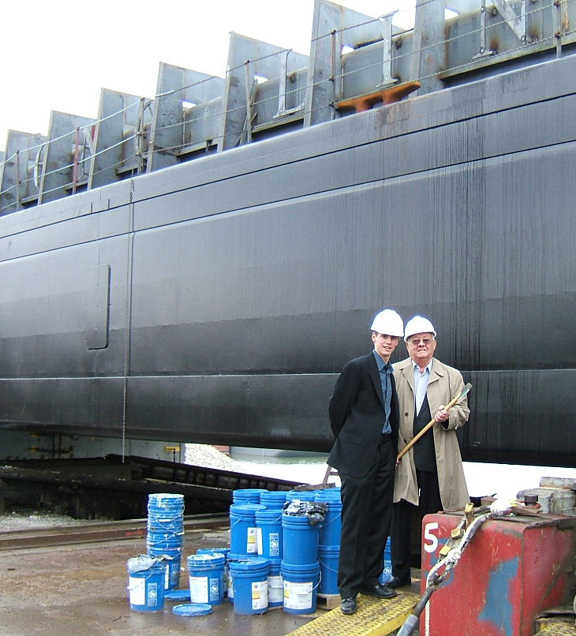
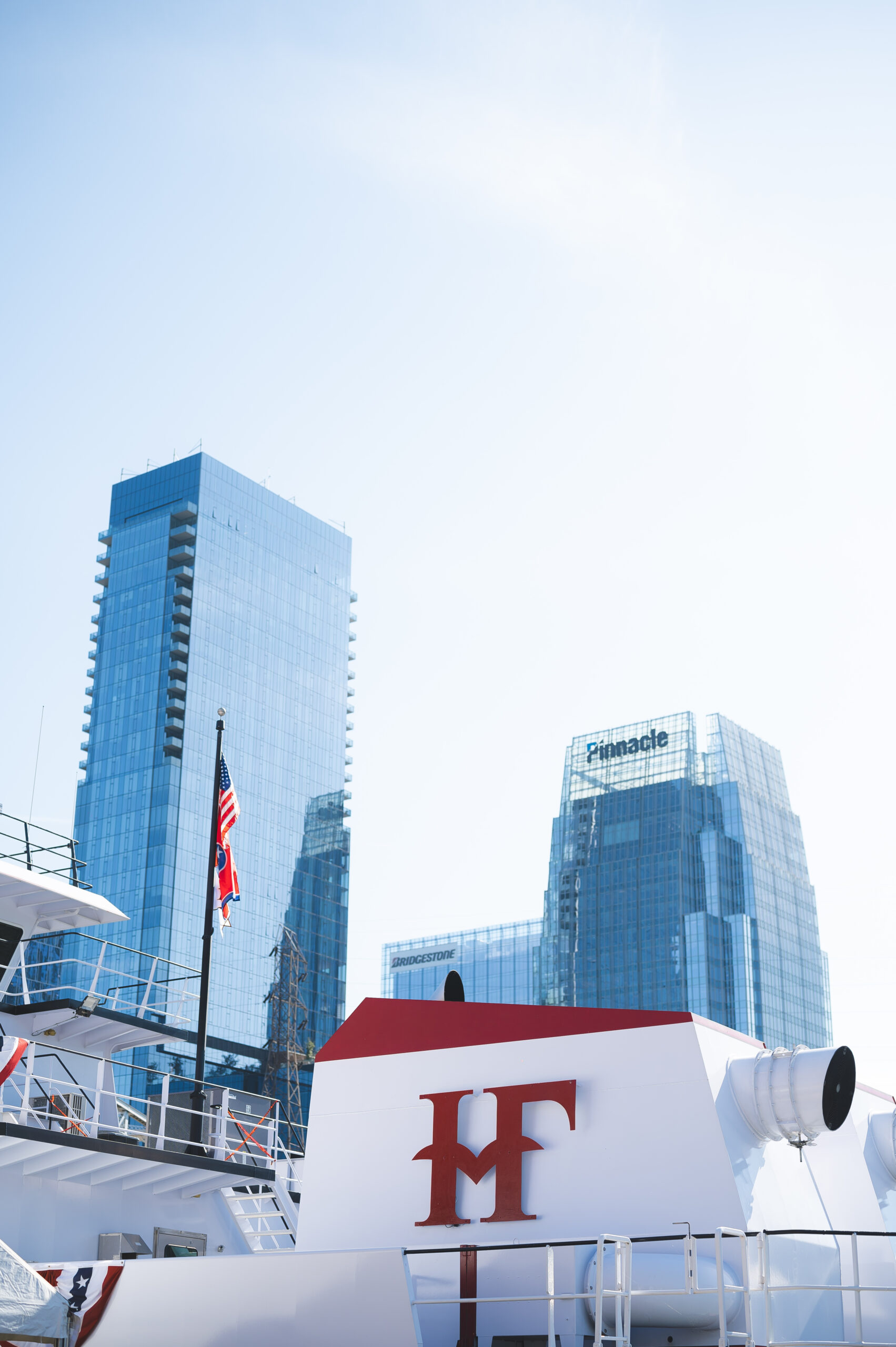
The most recent chapter in this storied family history in the river transportation industry is Hines Furlong Line, Inc. (HFL). HFL was incorporated on June 25, 2004, in Bowling Green, KY, by Kent E. Furlong, grandson of James G. Hines.
The following year, Jeffboat delivered the company’s first two 30,000 bbl tank barges. In the years since, HFL has experienced steady, significant growth. Today, the fleet includes 55 tank barges with a combined loaded capacity of approximately 1.4 million barrels (59 million gallons).
This expansion has been driven by strong demand for inland tank barges and HFL’s ability to supply both operational barge companies and end-user chemical and oil companies. HFL provides quality vessels with flexible, timely, and innovative designs that complement customers’ existing business lines and vessel fleets.
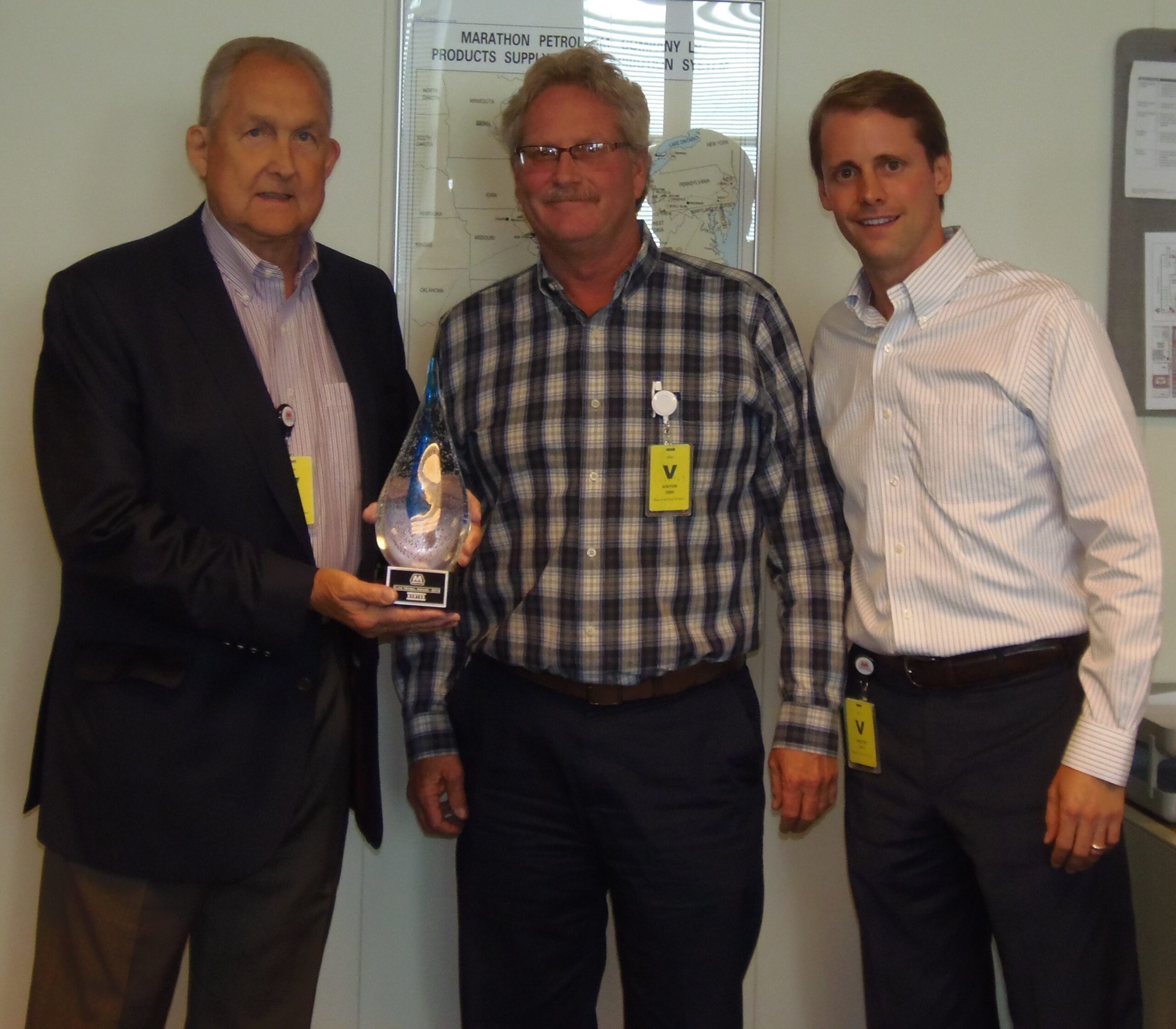
In December 2017, HFL purchased the assets of Hunter Marine Transport, Inc. of Nashville, TN.
Hunter Marine founder and President, Ron Hunter, was a longtime friend and business partner of Kent Furlong.
Hunter Marine was founded in 1976 on the west end of Nashville. It began with one boat, the M/V Sarah G. Hunter, named in honor of Ron's mother. This acquisition allows HFL to continue Ron’s life’s work and ensure that his legacy lives on.
The Hunter acquisition has expanded the reach and scope of HFL’s operations and broadened the services offered to customers. The transaction included a fleet of high-horsepower line-haul towboats, as well as several smaller harbor towboats. Hunter also operated two barge fleeting locations on the Cumberland River.
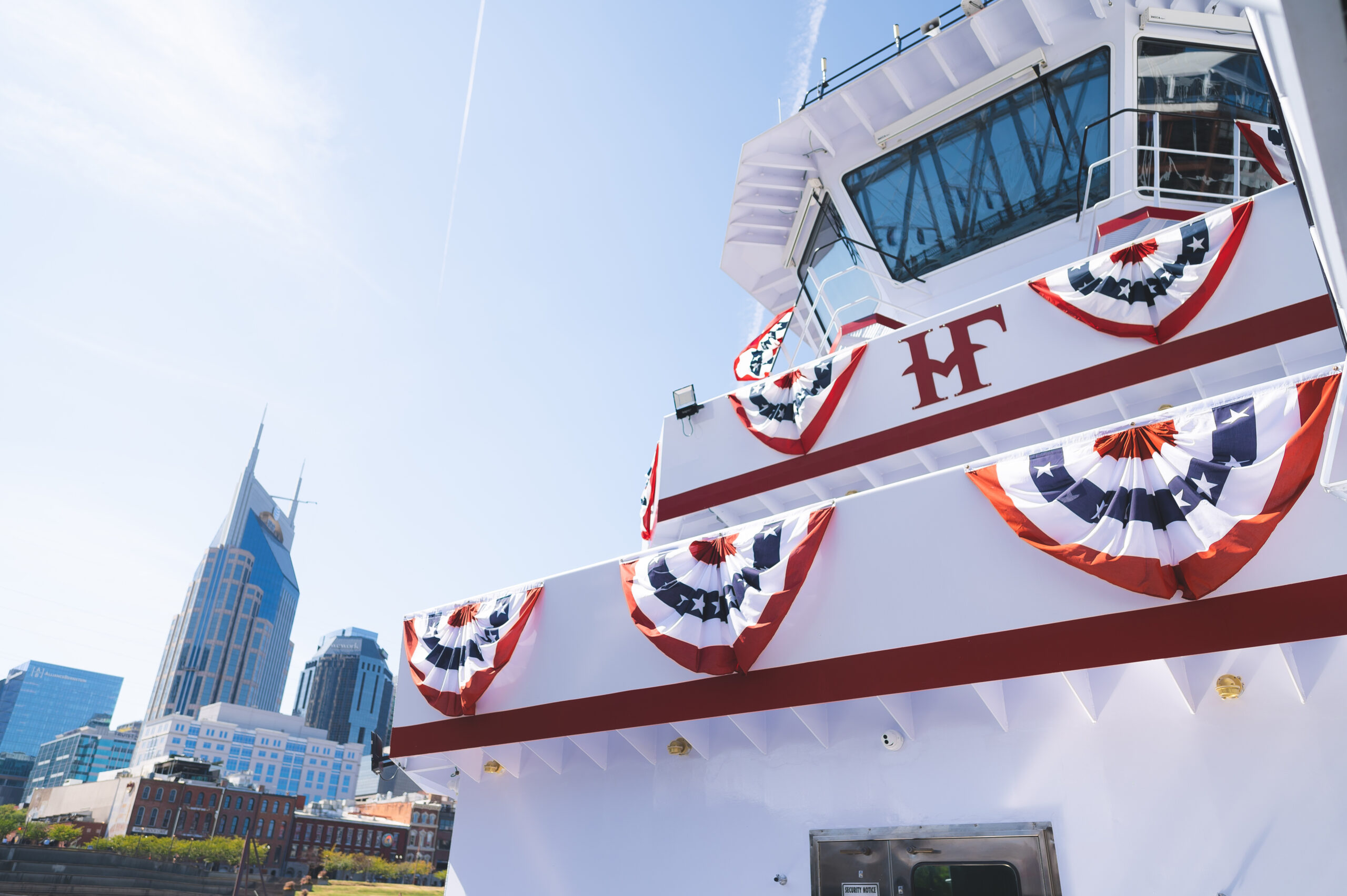
In January of 2026, HFL acquired the Campbell Transportation Company, Inc. River Division.
Today, the company is headquartered in Nashville, TN, with hubs in Paducah, KY and Pittsburgh, PA.
With the addition of the CTC River Division, HFL now employs over 800 mariners, shipyard and shoreside professionals.
The transaction strengthens HFL's capacity along the Ohio River and increases their fleet to 64 towboats, 870 hopper and tank barges, and 1,000 fleeting spaces.